Bespoke Design
How do you make a front entrance look as good as the house?
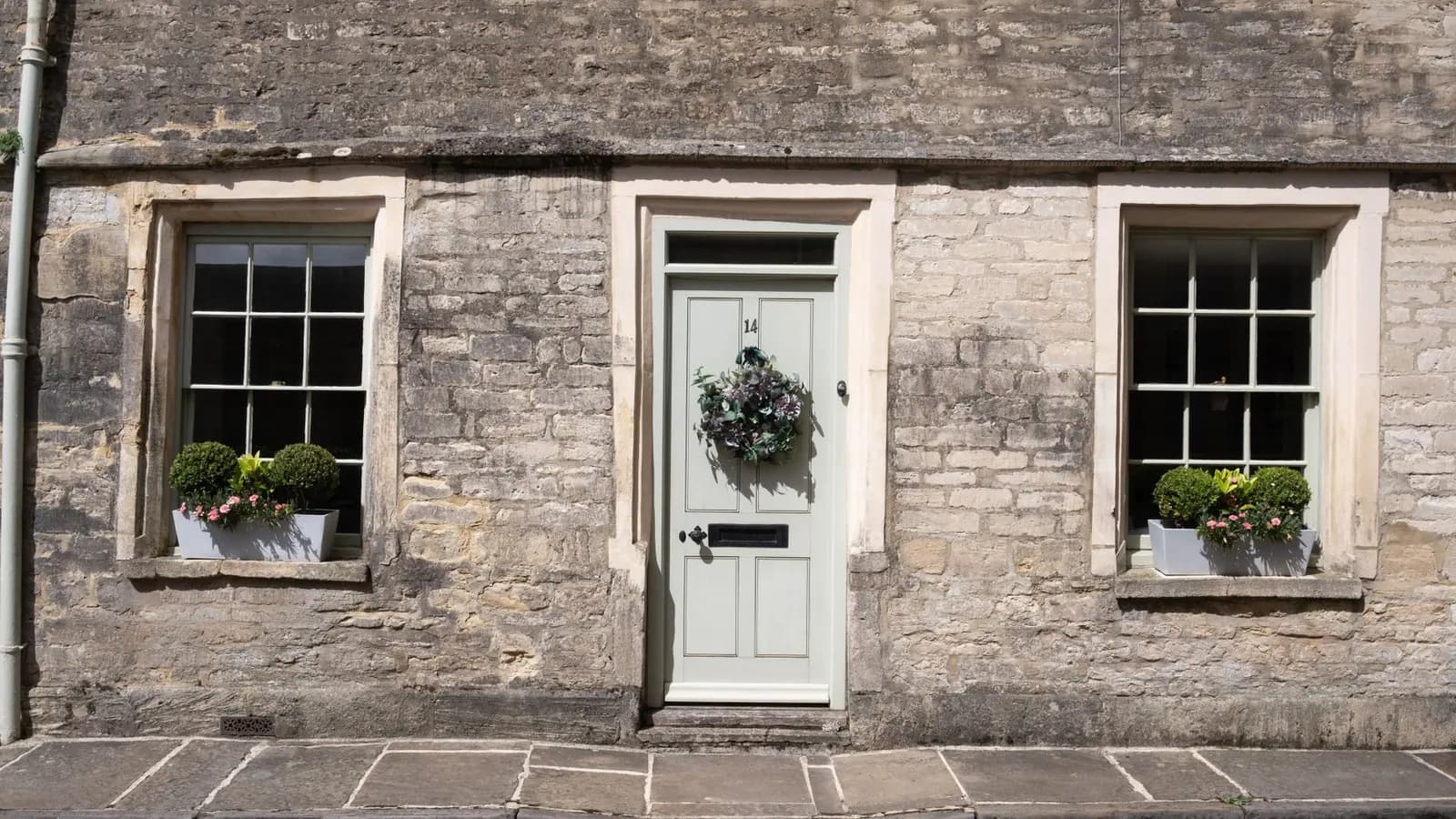
Height, weight and permanence: clipped evergreens such as yew, box or bay in substantial containers, matched to the scale and the light of the doorway.
Read moreBespoke Design
By Artisan PlantersPublished 6 min read
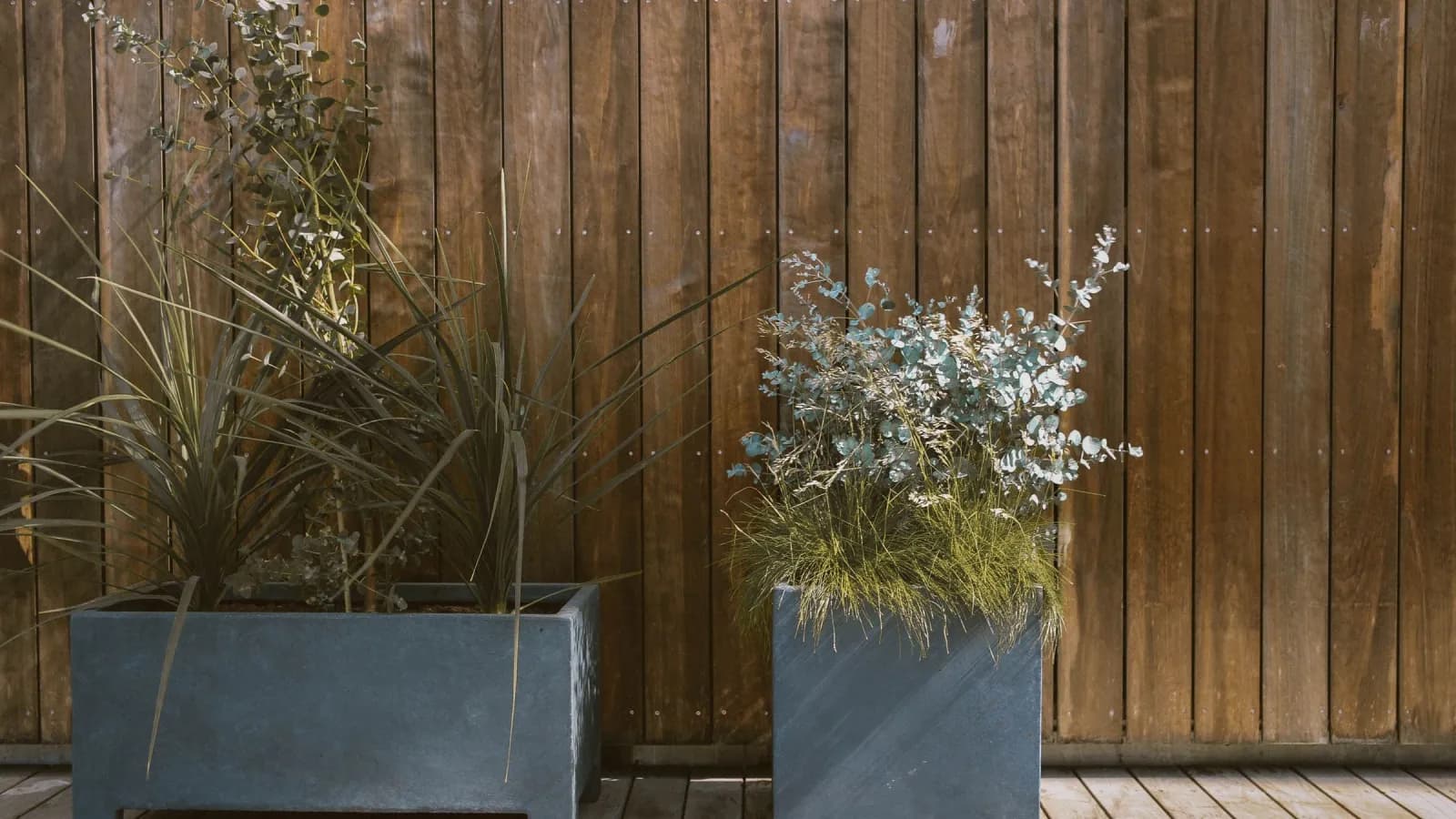
A contemporary house is the result of a few decisions made with great care: the line of the roof, the depth of a window reveal, the joint where glass meets stone. Planting tends to arrive later, chosen plant by plant, and brings a looseness the building never had. A mixed border of cottage favourites beneath a wall of glass reads as two ideas that have not met.
The opposite mistake is leaving the terrace bare, or setting one small pot by the door, so the house looks unfinished rather than calm. The answer sits between the two: fewer plants, chosen for their form and placed with the same care as the windows.
The RHS guide to choosing a garden style describes crisp, clean lines as an intrinsic part of contemporary design, and names the use of space, a geometric layout and the absence of too many fussy details and clutter alongside them. It says materials tend to be natural and timeless, such as stone, slate and wood, and that plants become just one part of the architecture. Its examples are clipped hedges, specimen trees and simple blocks of planting.
Beside a contemporary house, a plant belongs to the building as a step or a wall does.
The RHS feature on modern and minimal garden design puts the discipline plainly: less really is more, with repeated patterns and a limited selection of plants and colours. It advises doing the hard landscaping first and the planting after, rather than building the garden piecemeal. One example shows clipped box balls in planters whose pots repeat the grey colour scheme around them.
In a modern contemporary composition, three kinds of plant do most of the work.
Clipped evergreens give the geometry. The RHS guide to topiary explains that traditional subjects have usually been evergreens, so that they hold a permanent feature through the seasons, and names box and yew as the usual choices, with holly among the alternatives. It lists balls, pyramids and cubes among the easiest shapes. A tight sphere of box reads as a solid, repeating the order already in the facade. In our compositions a spire conifer does the same work at height.
Grasses bring movement without clutter. The RHS page on contemporary garden plants says grasses add structure, texture and movement, creating volume especially in late summer and autumn. It suggests Festuca glauca 'Blaufuchs' for its blue tussocks of low foliage. One grass repeated along a trough softens a hard edge without breaking it.
A specimen tree gives the vertical, chosen for an outline that reads clearly against a plain wall or glass.
| Element | What it does beside the house | What to plan for |
|---|---|---|
| Clipped evergreen, such as box balls, yew or a conifer spire | Geometry that holds through every season | Regular clipping to keep a crisp edge, and a watch for box blight, which the RHS warns about |
| Architectural grass | Movement and softness along a hard line | Deciduous grasses turn straw coloured in autumn and are cut back before new growth in spring |
| Specimen tree | Height and a single point of focus | A container scaled to the house, and a clear view of it from indoors |
| Ground finish, such as riven slate or basalt chippings | A quiet surface that ties the pieces together | One finish, used throughout |
By mid autumn this question starts to matter. The RHS guide to growing ornamental grasses explains that the foliage and seedheads of deciduous grasses turn straw coloured in autumn but should be left in place over winter to provide structure and movement. The old growth is removed before new shoots appear in spring. Against dark slate or concrete, those pale winter stems are part of the design rather than a lapse in it.
As part of the architecture. Polished concrete, riven slate and dark basalt suit clean lines because they belong to the same family of materials as the house. Take the colour from the window frames, the cladding or the terrace stone, so the planter reads as a continuation of the facade.
Weight matters as much as finish. The RHS topiary guide says a container for a clipped specimen should be big enough and well weighted to prevent it falling over if the container has dried out or there are high winds. For scale, our note on what size planter looks right against a large house goes further.
The first mistake is variety. A different plant in every pot turns a precise terrace into a collection, where one form repeated at a measured spacing would hold it together.
The second is buying planters before the paving, steps and doors are fixed, so they line up with none of them. The third is a period container, carved or urn shaped, which looks borrowed beside clean lines.
The last is neglect of the clipping. The topiary guide advises that existing specimens should be trimmed once or twice a year to keep their shape. On a contemporary house a soft, overgrown sphere is noticed at once, because everything around it is exact.
If the levels, paving and drainage are still undecided, that work belongs with an architect or garden designer first. The RHS also notes that a minimal style is harder to achieve with small children who need room for play, and a family garden may be better served by keeping the precise planting to the terrace nearest the house. And if nobody will be on hand to clip, a scheme built mainly from grasses and a single tree will keep its composure better than one that relies on topiary, though the grasses still need cutting back each spring and, in pots, regular watering through the summer. Some owners simply prefer abundance, and that is a good reason to choose something else.
Stand where the house is first seen and find its strongest line: a roof edge, a run of glazing, the edge of the terrace. Planting that follows it, in one material and a few repeated forms, looks designed with the building. The gallery shows our compositions in their settings.
The studio gardens are in Linby, Nottinghamshire. Appointment only, by design. You can write to us through the enquiry page to talk about planting for a contemporary house.
If something here has prompted a question about your own space, we would welcome the conversation.
Bespoke Design
Height, weight and permanence: clipped evergreens such as yew, box or bay in substantial containers, matched to the scale and the light of the doorway.
Read more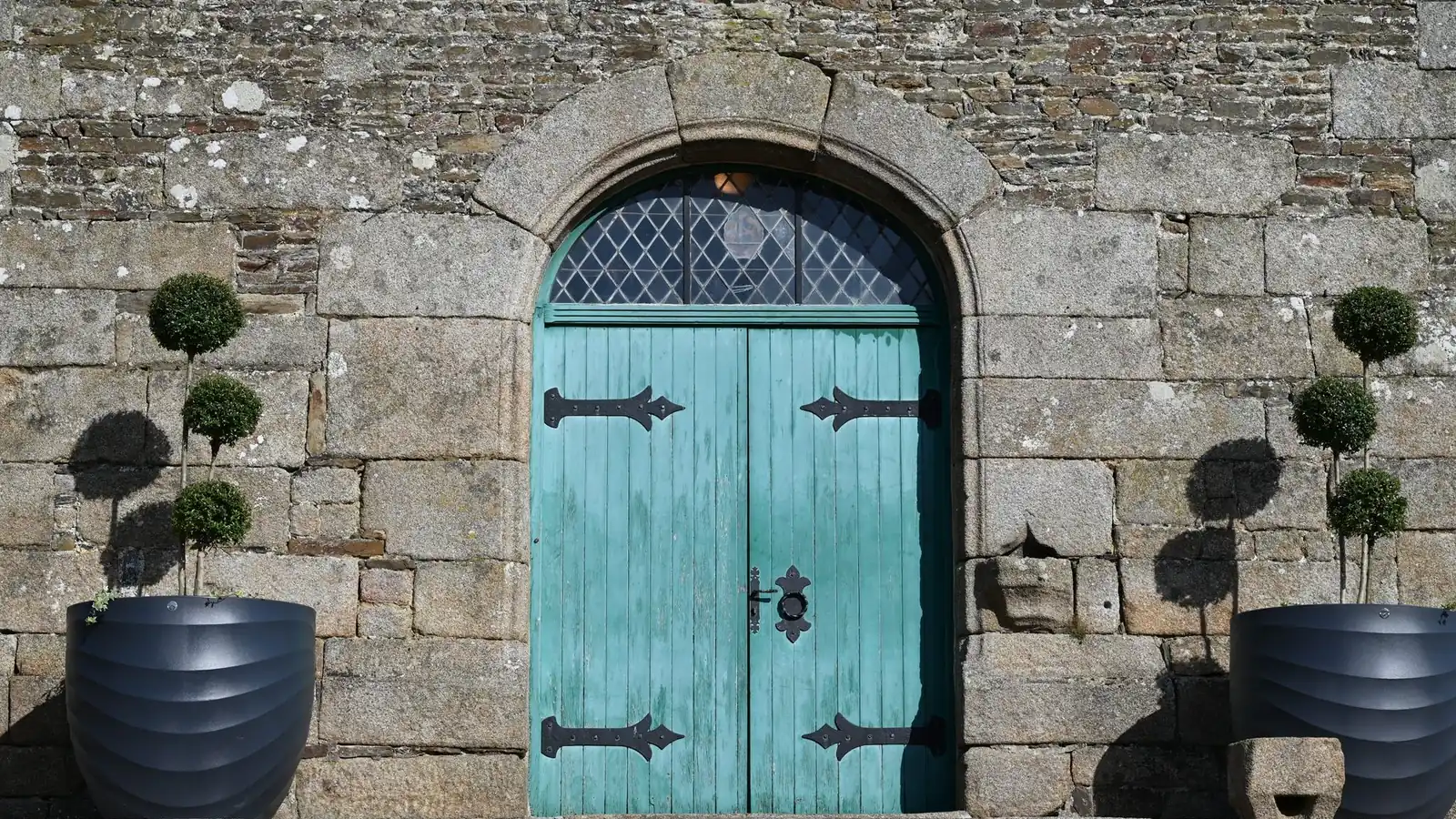
Bespoke Design
Usually larger than you expect, with the tree scaled up alongside it. Fewer, larger pieces suit a big facade, and testing the size on site settles the rest.
Read more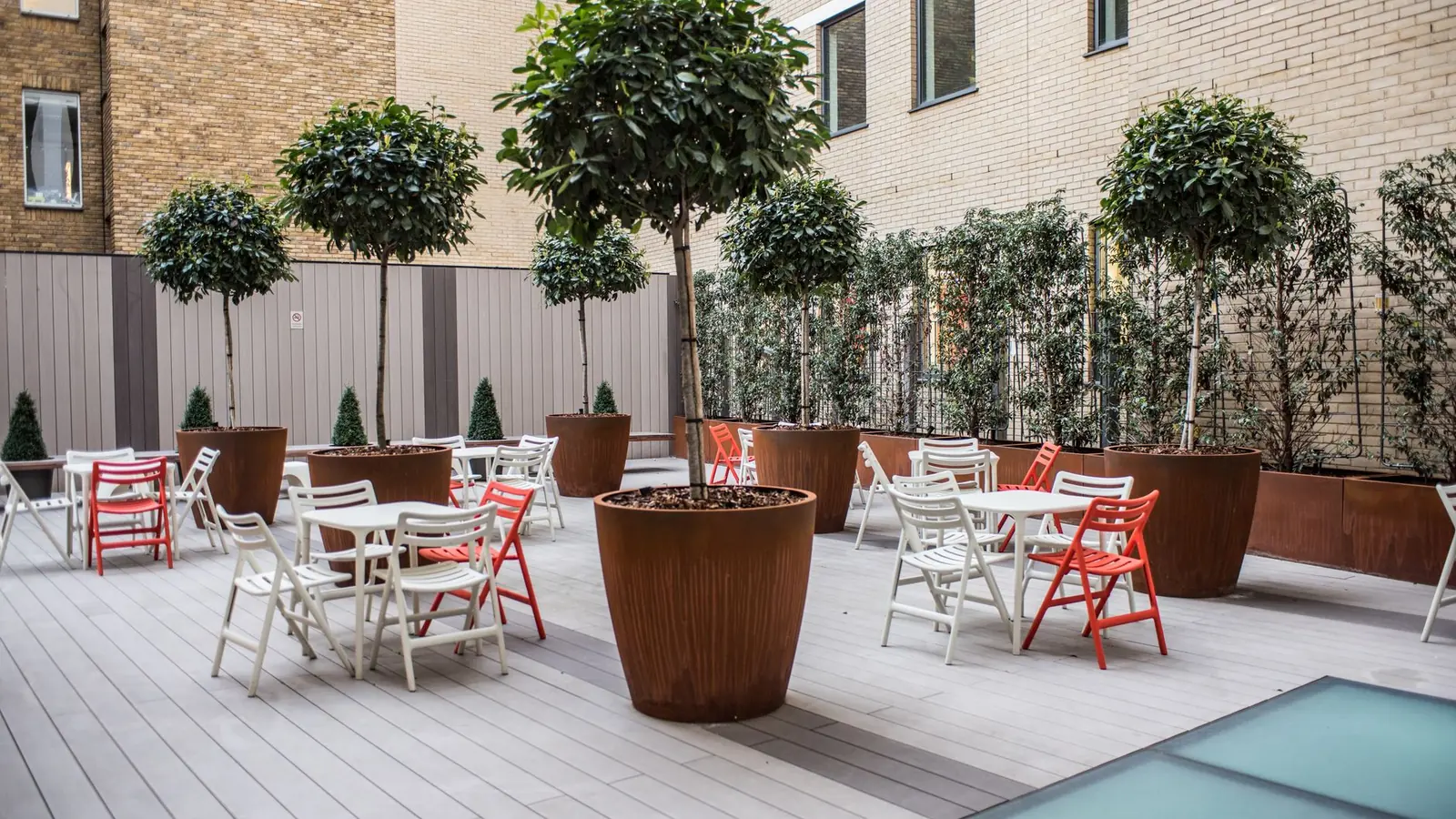
Bespoke Design
Yes, once a structural engineer has confirmed the load. Weight, wind and drainage then shape the planter, the tree and where it can safely stand on the roof.
Read more