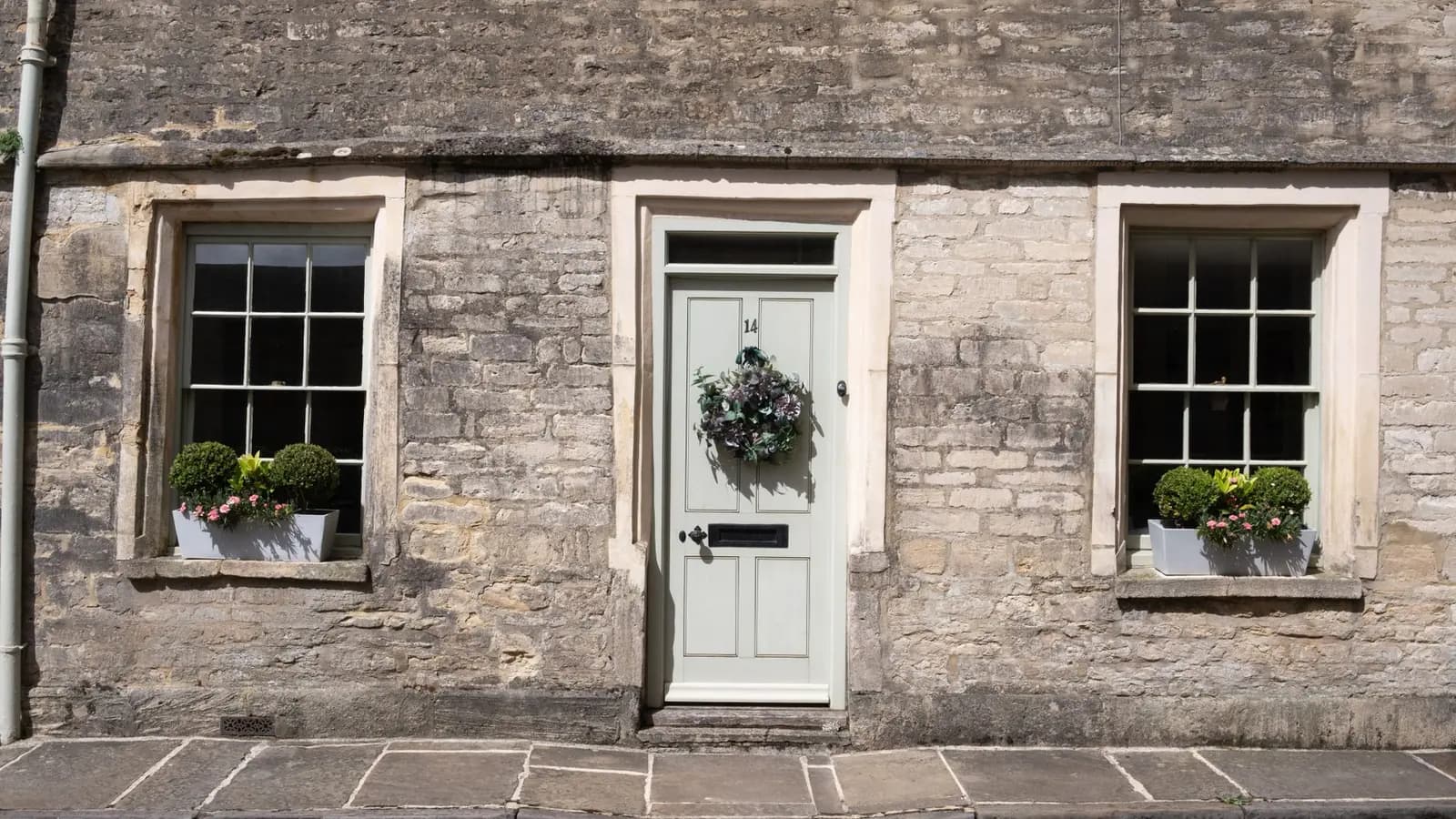
Bespoke Design
How do you make a front entrance look as good as the house?
Height, weight and permanence: clipped evergreens such as yew, box or bay in substantial containers, matched to the scale and the light of the doorway.
Read moreBespoke Design
By Artisan PlantersPublished 6 min read
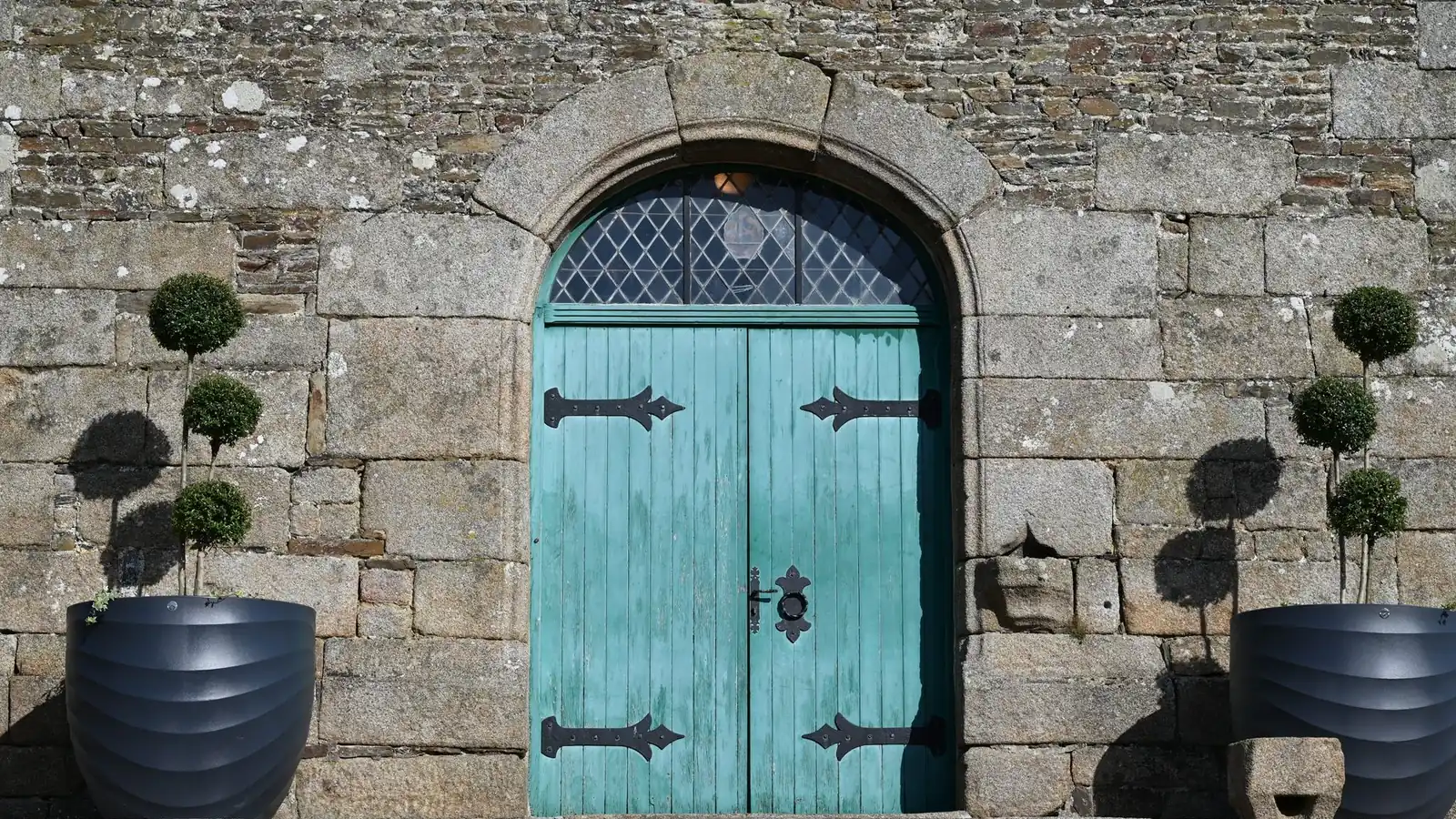
Most containers are chosen at close range. They are seen in a nursery, on a page or in a showroom, where a pot at knee height looks generous. Set against the facade it was bought for, the same pot shrinks. A three storey house, a broad flight of steps or a terrace that runs the length of the building changes the scale the eye uses, and the planter is read against all of it at once.
Often several modest pots are spread along a terrace in the hope that quantity will make up the difference, and the space looks busier without looking any more finished.
The RHS guide to growing plants in containers puts the principle simply: it is usually easier, and often looks better, to have fewer large containers rather than lots of small ones. It adds a practical reason. Large containers hold a greater volume of compost, dry out more slowly than small ones, and are less work to look after.
Size has to follow the plant as well as the view. The same guide says the ideal pot for a single specimen is only slightly larger than the rootball, and warns that tall, narrow containers are prone to being blown over, particularly with tall plants in them. The RHS guide to trees in containers advises against putting a small tree in a very large container, and suggests potting up in stages to a final container of about 45cm (18in) as a minimum.
Together, those points come down to proportion. A planter cannot be scaled up on its own. The tree has to be scaled up with it, so that the container fits the rootball and the whole piece fits the house.
We look at three relationships rather than at the planter alone.
The first is height. A specimen beside a door or against a wall is read against the openings around it: the door, the windows, the line of a string course or a parapet. A tree that stops well short of anything in the facade tends to look like an afterthought, while one that relates to a clear line in the building looks placed.
The second is mass. A broad, solid container holds the ground in a way a slender one does not, and on a large terrace it is the weight at the base that stops a composition looking temporary.
The third is rhythm. Along a long terrace, the spacing between pieces matters as much as their size. Evenly spaced repetition suits a formal elevation. A single large group, with open paving either side, often suits a modern or asymmetric house better.
| Setting | What tends to look right | What tends to look wrong |
|---|---|---|
| Wide formal entrance | A matched pair, tall enough to relate to the door | Small pots at step level |
| Long terrace | Fewer, larger pieces at a measured spacing | Many small containers along the edge |
| Modern elevation | One substantial specimen or a single strong group | Scattered pieces with no clear relationship |
| Courtyard | One specimen sized to the walls around it | A large container with a small tree inside |
On site, with something simple. Canes, a stack of boxes or a tarpaulin held to the height and width of the intended piece will tell you more in ten minutes than a drawing will. Look from the places that matter: the gate, the approach to the door, the main windows and the room you sit in most.
Mid September suits this well. The autumn equinox is only days away, and the Met Office notes that after it the nights become longer than the days. The sun is already lower and the shadows across a terrace are growing longer. Testing scale in this light gives a fair idea of how a tall piece will shade the paving and the windows behind it as the days shorten, and those shadows will reach further still by midwinter.
For the tree itself, the RHS guide to trees for smaller gardens suggests drawing a scale plan and plotting the size of the tree at maturity. It also points out that even small ornamental trees may, over time, reach a height of 6-8m (20-26ft) or more. A container restricts that growth, but the eventual size of the specimen still belongs in the plan.
One mistake is buying containers before the specimen, then finding the trees that fit them are too small for the house. Another is compensation: a very large pot around a young tree, which the RHS advises against, and which looks out of proportion until the tree catches up. A third is spreading the budget across many pieces, when the RHS says fewer, larger containers are usually easier, and often look better.
If the terrace is narrow, a large container can block the way through, and comfortable access matters more than proportion. If the facade is already busy with detail, a quieter, lower planting may sit better than another strong vertical. And where the structure below is a roof, a balcony or a cellar, the weight of a large container is a question for a structural engineer before it is a question of taste.
Photograph the facade or terrace from the gate and from inside the house, then sketch the pieces over the photographs at the size you have in mind. Most questions of scale settle quickly once you see them in place. The gallery shows compositions against stone and brick.
The studio gardens are in Linby, Nottinghamshire. Appointment only, by design. You can write to us through the enquiry page to talk about the scale of your space.
If something here has prompted a question about your own space, we would welcome the conversation.
Bespoke Design
Height, weight and permanence: clipped evergreens such as yew, box or bay in substantial containers, matched to the scale and the light of the doorway.
Read more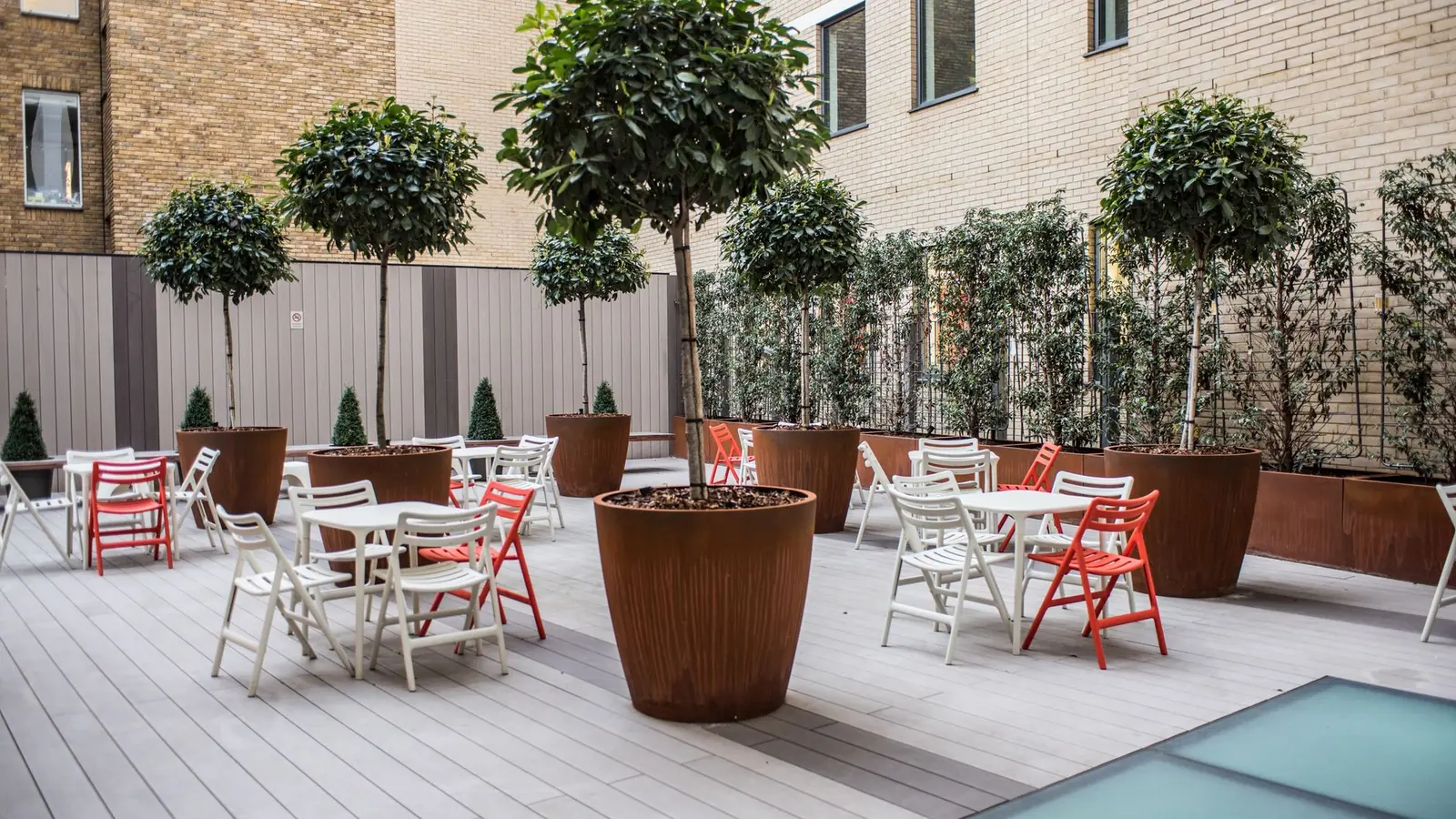
Bespoke Design
Yes, once a structural engineer has confirmed the load. Weight, wind and drainage then shape the planter, the tree and where it can safely stand on the roof.
Read more
Planting and Compositions
A terrace looks unfinished when everything sits low. A specimen tree in a substantial container adds the height and structure that paving alone cannot give.
Read more