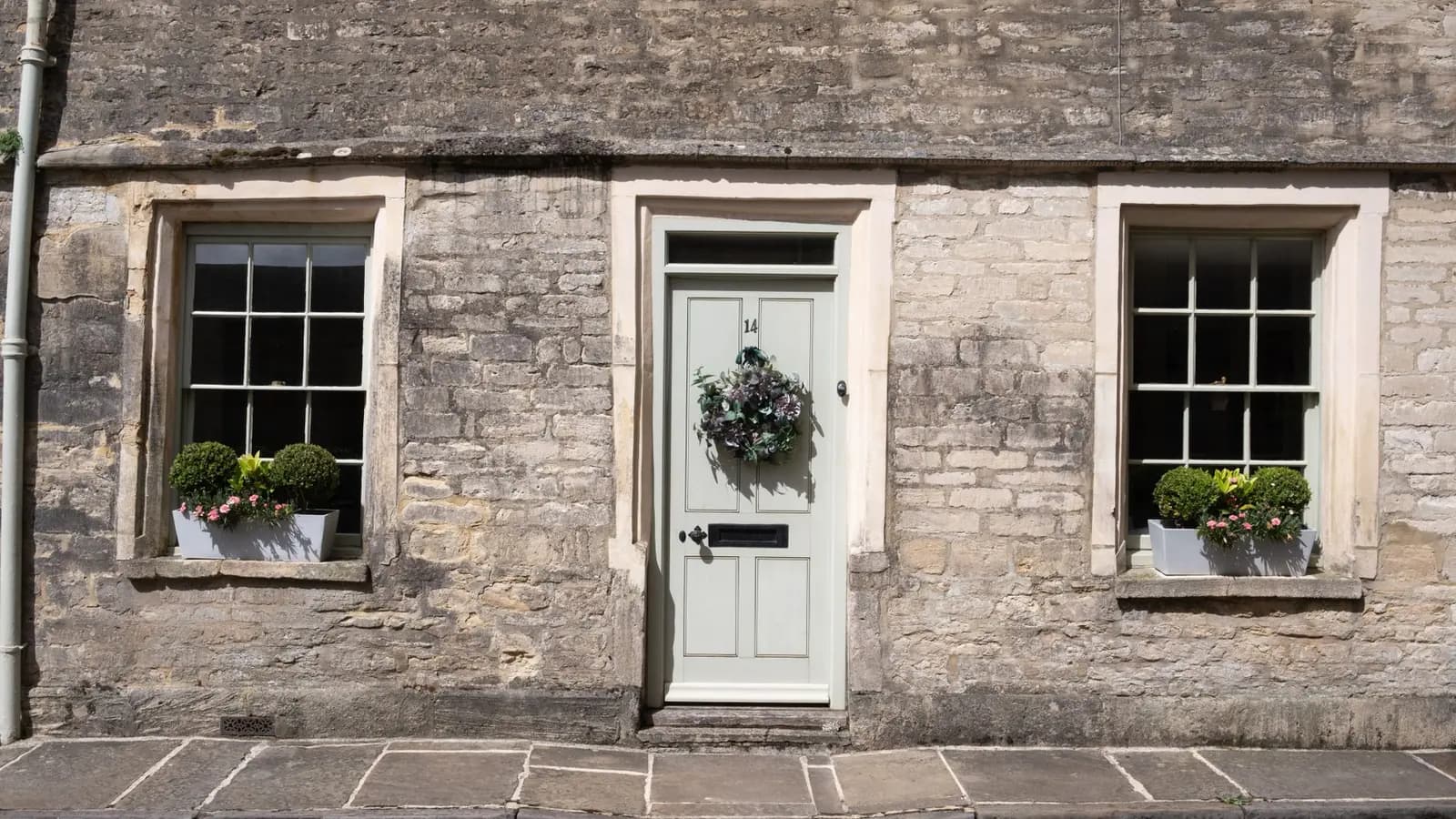
Bespoke Design
How do you make a front entrance look as good as the house?
Height, weight and permanence: clipped evergreens such as yew, box or bay in substantial containers, matched to the scale and the light of the doorway.
Read moreBespoke Design
By Artisan PlantersPublished 6 min read
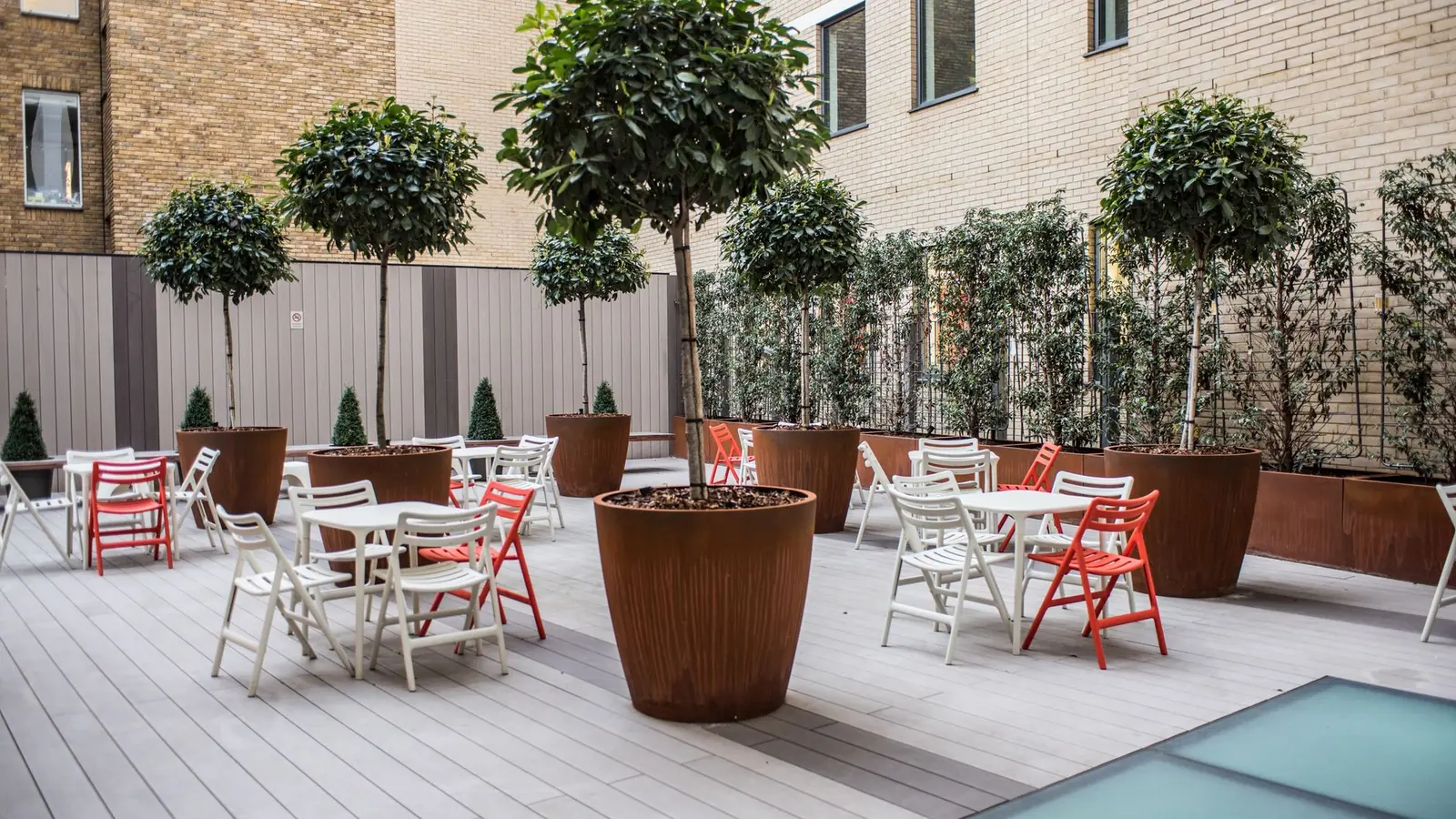
A roof terrace is one of the most rewarding places to put a fine container, and one of the least forgiving. Everything a garden at ground level does quietly, the roof has to do by design. There is no soil below to take the weight, no hedge to break the wind, and, under an overhang, no rain reaching the pots at all.
None of this rules out a specimen tree. It means the planting has to be thought through with the building, rather than added to it. Three questions shape a roof composition: how much weight the structure can carry, how the wind moves across it, and where the water goes.
The RHS guide to roof gardens and balconies is clear that the first thing to establish is how much weight the roof can take, because large containers full of compost and plants weigh a considerable amount, as do the people using the garden. It notes that balconies suspended out from a building carry strict weight restrictions, and recommends the services of a chartered structural engineer or a surveyor.
Its practical advice follows from that. Heavy containers should sit near load bearing walls or over a load bearing beam or joist, which can take more weight than unsupported areas. Where those points are on a particular roof is for the engineer to confirm. The RHS also describes a false floor, raised partly or completely above the existing roof, as a common way of directing weight onto the surrounding walls.
We do not give structural advice, and no planter studio should. The engineer's figures come first, and the composition is designed within them. That conversation can shape the design for the better: it fixes where the heaviest pieces can stand, and the planting is arranged around those points rather than spread evenly across the deck.
The RHS roof gardens guide names strong winds and sunshine as the main limitations. In its guide to greening balconies and roof gardens it advises that containers on exposed rooftops should have a low centre of gravity so they are not blown over, and that taller plants, trees and topiary among them, will need fixing securely to the building or to rails.
Screens matter too. Solid walls can cause turbulence on the leeward side, and the RHS suggests slatted or mesh screens that filter the wind and create a sheltered pocket for the plants within. A tree is therefore placed where the structure can take its weight, where it can be secured, and where it sits in the lee of something rather than on the open edge.
The RHS explains that plants tolerant of wind and sun usually have leaves that lose less water: needle leaves such as pines and grasses, very small leaves, grey hairy foliage or waxy surfaces. It names Pinus mugo as a windbreak plant that tolerates sun and wind, and dense, hardy evergreens such as Viburnum tinus and junipers for shelter. Grasses work especially well, because their narrow leaves let the wind pass through.
| Choice | Why it suits a roof | What to plan for |
|---|---|---|
| Pinus mugo | Needle leaves, tolerates sun and wind | A low, broad container and secure fixing |
| Juniper | Dense, hardy evergreen that gives shelter | Placing it to shield softer planting |
| Ornamental grasses | Narrow leaves let the wind through | Long, low troughs rather than tall pots |
| Japanese maple | Fine leaves and autumn colour | Only in a genuinely sheltered corner, since the RHS says it does best sheltered from strong winds and warns of leaf scorch in windy or very sunny spots |
Roof containers dry out fast and must also drain freely. The RHS advises containers of a good width and depth, because they dry out rapidly in windy, hot weather, with ample drainage holes and a layer of lightweight drainage material at the base. It suggests raising containers off the surface so the roots do not become waterlogged, and points out that containerised plants on a roof need watering all year round, except in freezing conditions.
The same guide notes a problem specific to balconies: an overhang from the floor above can stop rain reaching the pots entirely. In warm, windy weather the RHS says plants may need watering once, if not twice a day, and that an automatic irrigation system is the ideal answer for larger roof gardens. On a roof, irrigation is drawn into the design from the start.
One mistake is to choose the containers first and ask about the roof afterwards. A pair of heavy pots bought for a terrace at ground level can be quite wrong for a deck several storeys up. Another is placing a tall tree on the open edge for the view, where it takes the full force of the wind. A third is relying on rain that never arrives under an overhang.
Meteorological autumn begins on 1 September, and the Met Office notes that the later part of the season can bring stormy conditions with strong gales as Atlantic depressions cross the UK. The RHS gives spring or autumn as the ideal planting times for roof gardens, so that plants can establish before harsher conditions arrive. Early autumn is a sensible moment to have the engineer's advice in hand, the fixings agreed and the planting settled before the windier months.
If the engineer finds the roof cannot take the load, a specimen tree is not the right choice, however well it is secured. A lighter scheme of grasses and low evergreens in shallow troughs may suit the space better, or the RHS points to a green roof where there is no water supply. If planning permission or a lease restricts what can stand on the roof, that question comes before any design.
Start with the structural information you already have, or ask your architect or engineer what the roof was designed to carry. With that in hand, the light, the wind and the view from inside settle the rest. The gallery shows compositions in their settings.
The studio gardens are in Linby, Nottinghamshire. Appointment only, by design. You can write to us through the enquiry page to talk about your roof terrace.
If something here has prompted a question about your own space, we would welcome the conversation.
Bespoke Design
Height, weight and permanence: clipped evergreens such as yew, box or bay in substantial containers, matched to the scale and the light of the doorway.
Read more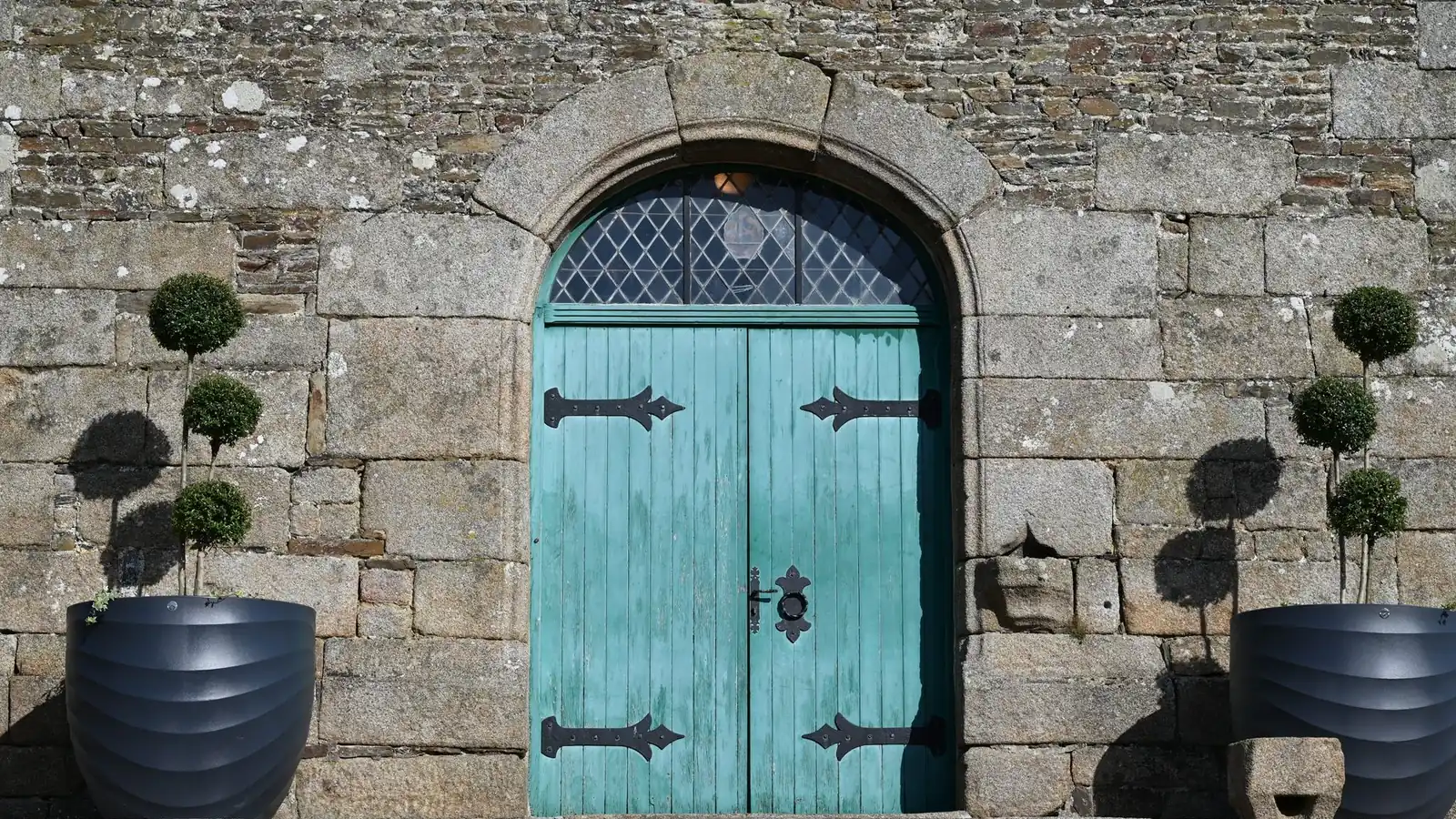
Bespoke Design
Usually larger than you expect, with the tree scaled up alongside it. Fewer, larger pieces suit a big facade, and testing the size on site settles the rest.
Read more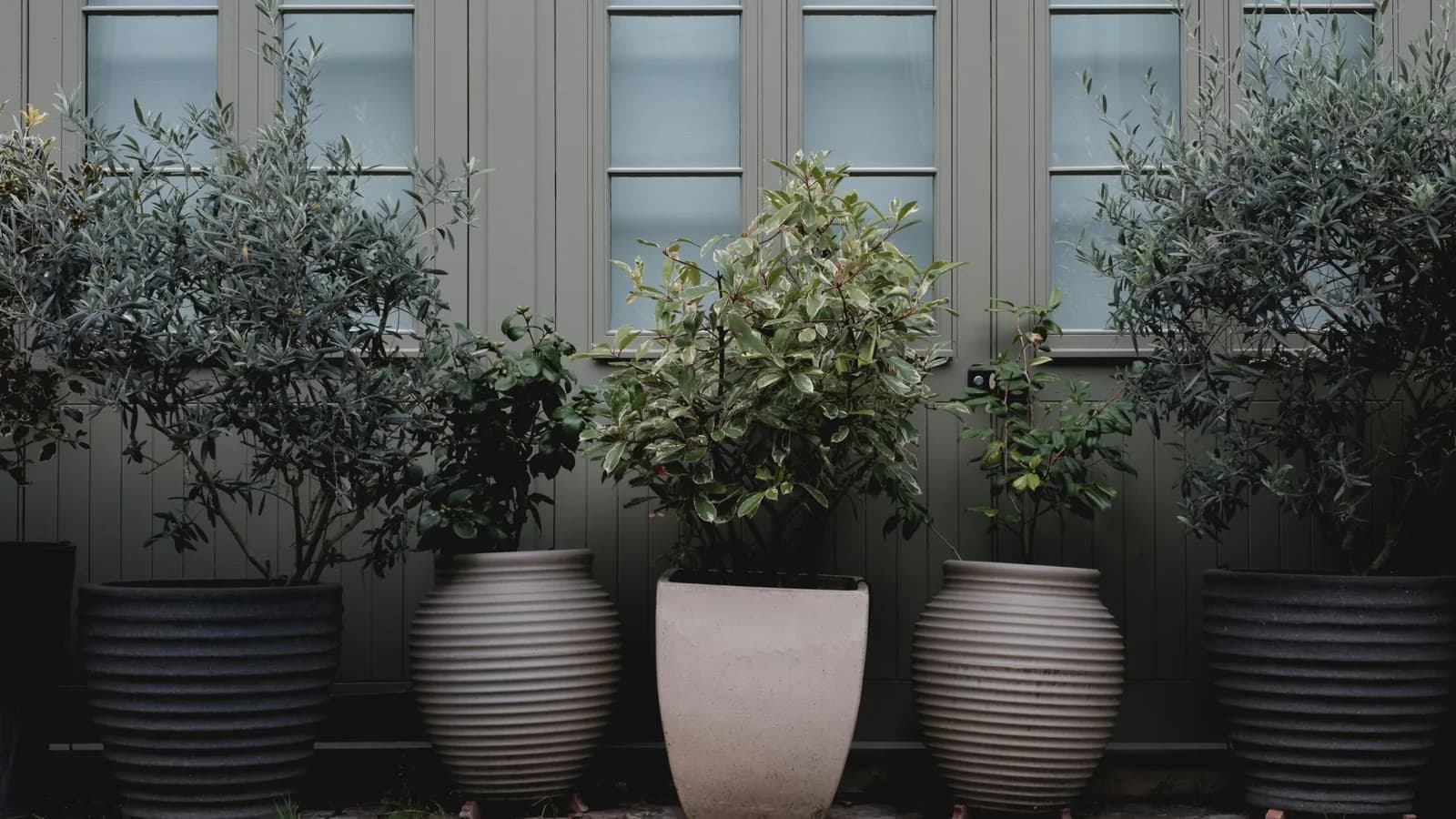
Planting and Compositions
A terrace looks unfinished when everything sits low. A specimen tree in a substantial container adds the height and structure that paving alone cannot give.
Read more