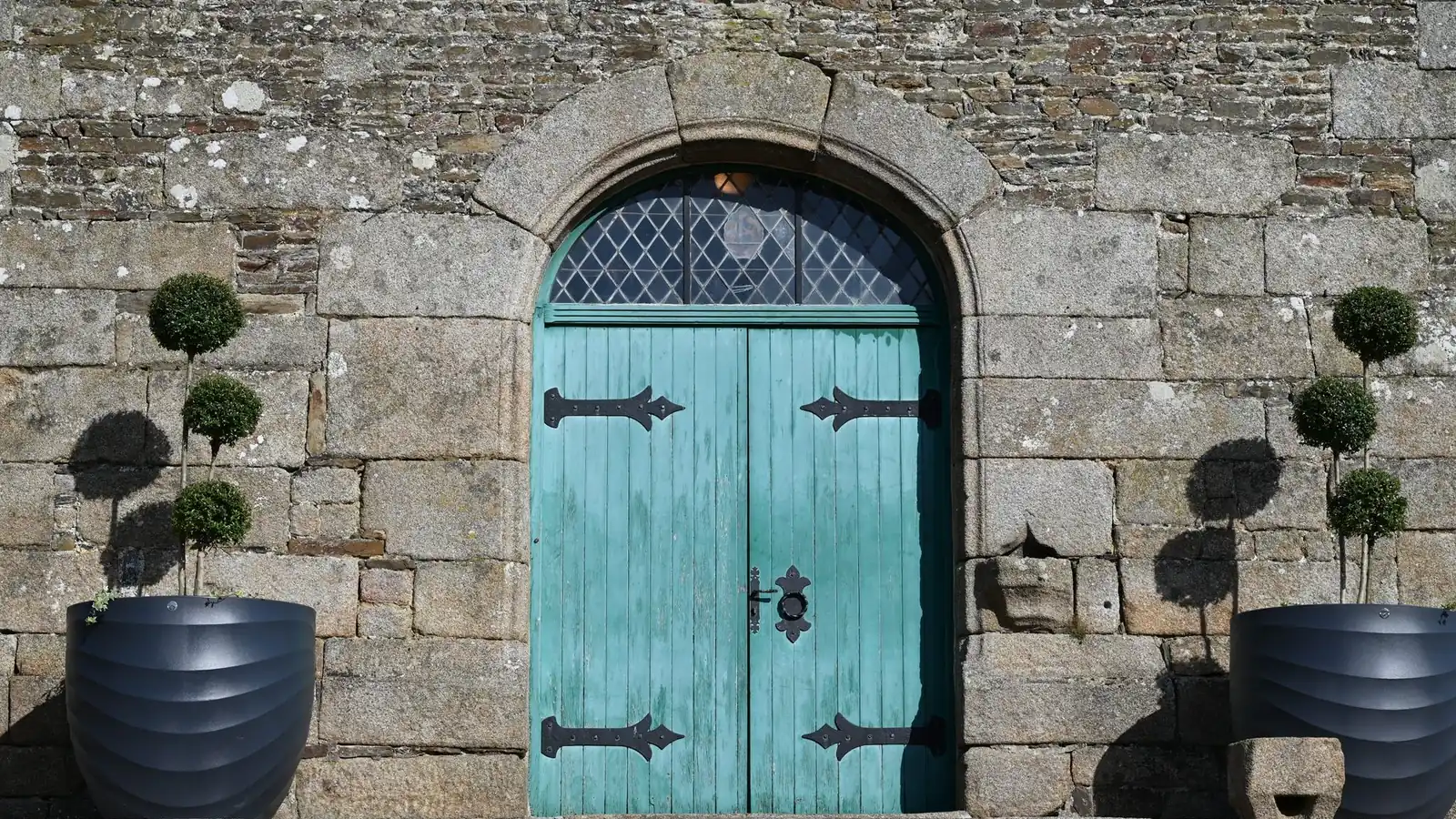
Bespoke Design
What size planter looks right against a large house?
Usually larger than you expect, with the tree scaled up alongside it. Fewer, larger pieces suit a big facade, and testing the size on site settles the rest.
Read moreBespoke Design
By Artisan PlantersPublished 6 min read
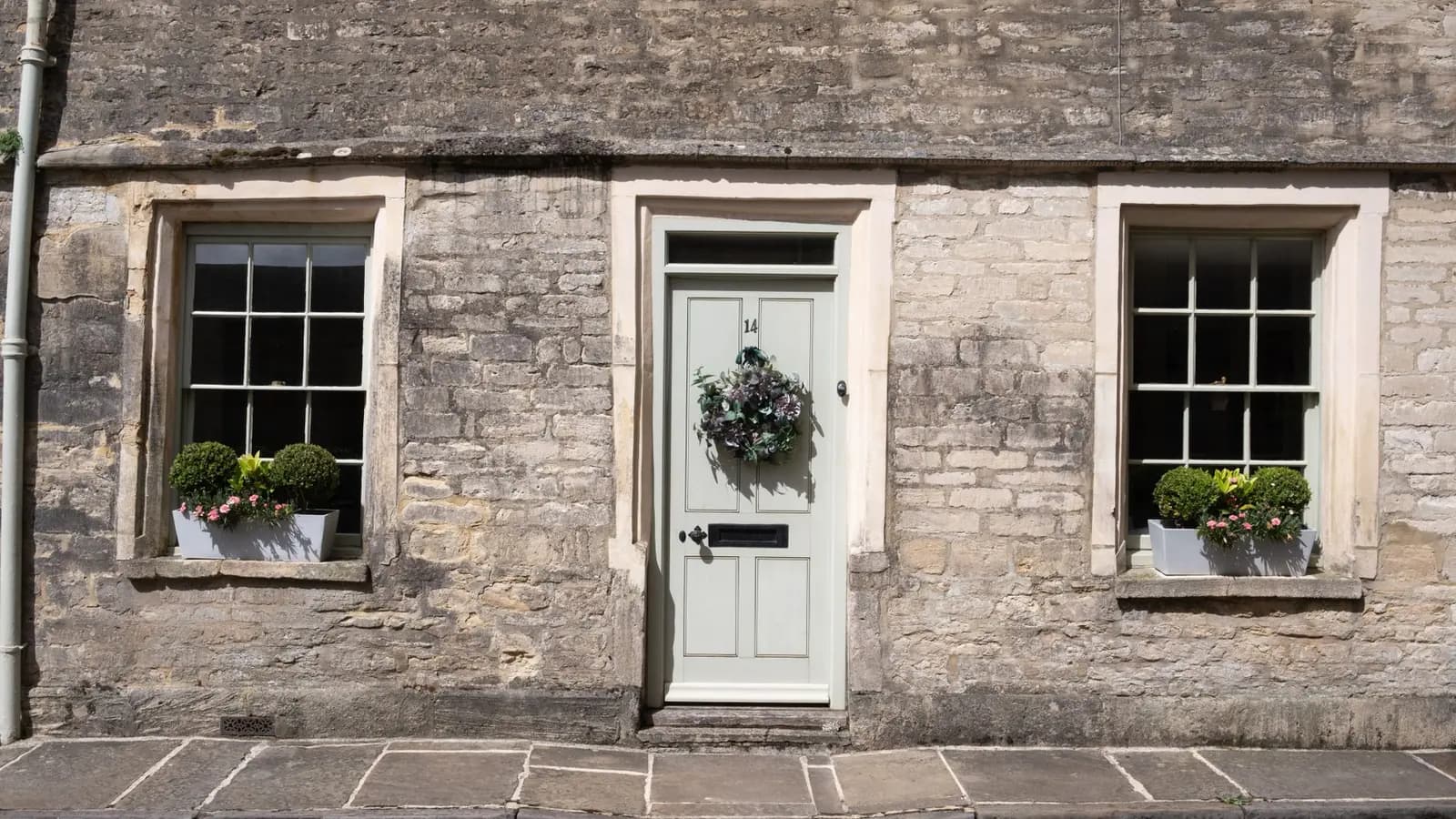
The entrance is the part of a house that everyone sees, and it is often the last part anyone thinks about. The door, the step and the path are finished with the building, and the planting is left for later. Later tends to mean a pair of small pots chosen on the day, or nothing at all.
What reads as a lack of presence is usually a question of scale and permanence. A doorway in a substantial facade needs something beside it with weight and height, and something that looks the same in January as it does in June. Seasonal bedding changes the colour of an entrance. It rarely changes how the entrance feels.
Across its growing guides, the Royal Horticultural Society points to clipped evergreens. Its yew growing guide says containerised yews work well as focal points or to add a formal feature to patios and doorways, and that yew will thrive in almost any soil or situation, even deep shade. Its box growing guide describes box clipped into topiary shapes and placed either side of a path or doorway. The bay growing guide notes that clipped bay can create formal shapes that make an entrance.
The reason sits in the RHS guide to topiary: traditional subjects have usually been evergreens, so that they hold a permanent feature through every season. On scale, the RHS advice on front gardens suggests evergreen shrubs in pots at least 45cm (18in) wide if containers are to look good for more than one season. Treat that as a floor rather than a target. Beside a tall door or a broad flight of steps, the container usually needs to be a good deal larger to hold its own.
Mostly by the light the door receives and how sheltered it is. A door that faces north or sits in the shadow of a porch narrows the choice faster than any question of style.
| Yew | Box | Bay | |
|---|---|---|---|
| Light | Thrives in almost any situation, even deep shade | Sun or shade, and tolerates deep shade | Needs a sheltered sunny or part shady position |
| Winter | Evergreen foliage the RHS says provides year round appeal | Evergreen, small leaves, dense growth | Withstands temperatures down to -5°C (23°F), though frost and cold winds can damage the foliage |
| What to watch | All parts except the fruits are highly poisonous | Box blight and box tree caterpillar | Roots in a pot can freeze through in a cold winter |
Yew has a dark, matt depth that suits old brick and stone, and it clips to a clean line. Box gives the tightest, smallest scale of leaf. Bay is softer and glossier, and it asks for a warmer, more sheltered door than the other two.
A matched pair either side of a door repeats the order that is already in a symmetrical facade. The eye reads the door as the centre of the house, which is usually what the architect intended. For a pair to work it has to be a true pair: the same specimen, the same height, the same container. Two forms that almost match read as a mistake rather than a decision.
On an asymmetric or contemporary house, a single specimen set to one side of the door is often the stronger answer. It gives the approach a point to walk towards without pretending to a symmetry the building does not have. In both cases restraint does more than quantity. Two well chosen forms will give a door more presence than six smaller pots arranged along the step.
The first mistake is buying small, for the reasons above. The next is choosing the container on its own, from a catalogue or a shelf, rather than for the house. A container at a front door sits within arm's reach of the brick, stone or render of the facade and the paint of the door itself, so its material, colour and finish need to belong to them.
The third is choosing box out of habit. The RHS says box has come under attack from box blight fungus and box tree caterpillar, and that both can cause serious damage. For a shaded door, yew is often the steadier choice. It does carry its own caution: the RHS warns that all parts of yew except the fruits are highly poisonous, so its position matters where children or animals pass.
Less than a border, but not none. The RHS front garden advice is plain that containers require watering and regular maintenance to do well, and the yew guide adds that plants in containers need regular watering because they have limited access to water. Topiary needs trimming to keep its shape: the RHS topiary guide says existing specimens should be trimmed once or twice a year, and vigorous species may need more. Bay brings one more task, since the RHS notes that the roots of container grown plants can freeze through the pot in a cold winter.
If the door, the step or the path is in poor repair, a fine pair of containers will draw the eye to the problem rather than away from it. That work comes first. If the approach is narrow, large containers can make the way in awkward, and easy access for everyone who uses the door matters more than any planting. Where there is simply no room on the ground, the RHS front garden guide points out that climbers and wall shrubs take up little space, and a well trained plant on the wall beside the door may suit the house better than anything in a pot.
Walk to the end of the drive or the gate and look back at the door as a visitor first sees it. Notice the height of the opening, the light it gets through the day, and the materials around it. Those three things usually settle the specimen, the scale and the container between them. The gallery shows how our compositions sit against stone and brick in their settings.
The studio gardens are in Linby, Nottinghamshire. Appointment only, by design. You can write to us through the enquiry page to talk about your entrance.
If something here has prompted a question about your own space, we would welcome the conversation.
Bespoke Design
Usually larger than you expect, with the tree scaled up alongside it. Fewer, larger pieces suit a big facade, and testing the size on site settles the rest.
Read more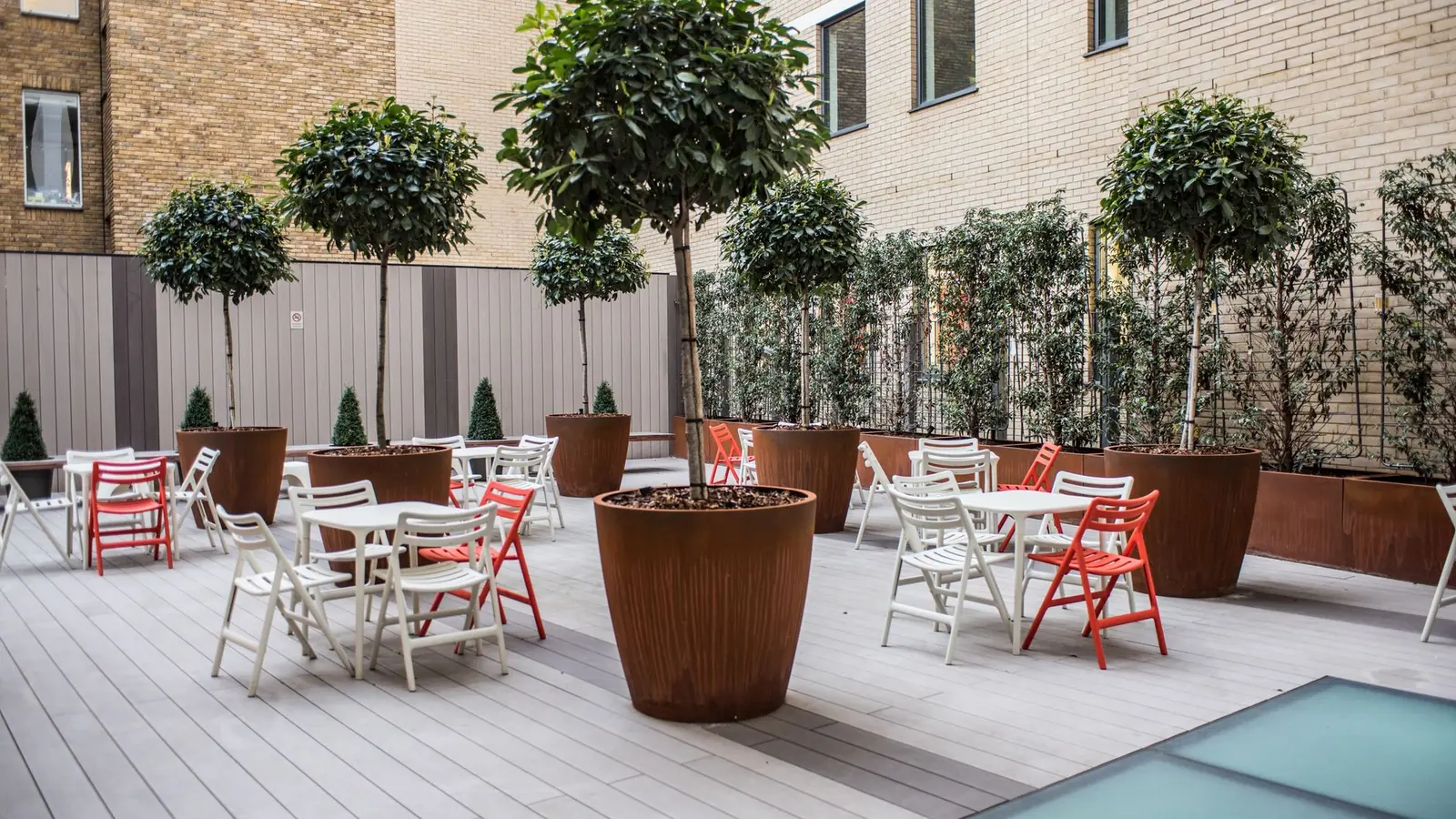
Bespoke Design
Yes, once a structural engineer has confirmed the load. Weight, wind and drainage then shape the planter, the tree and where it can safely stand on the roof.
Read more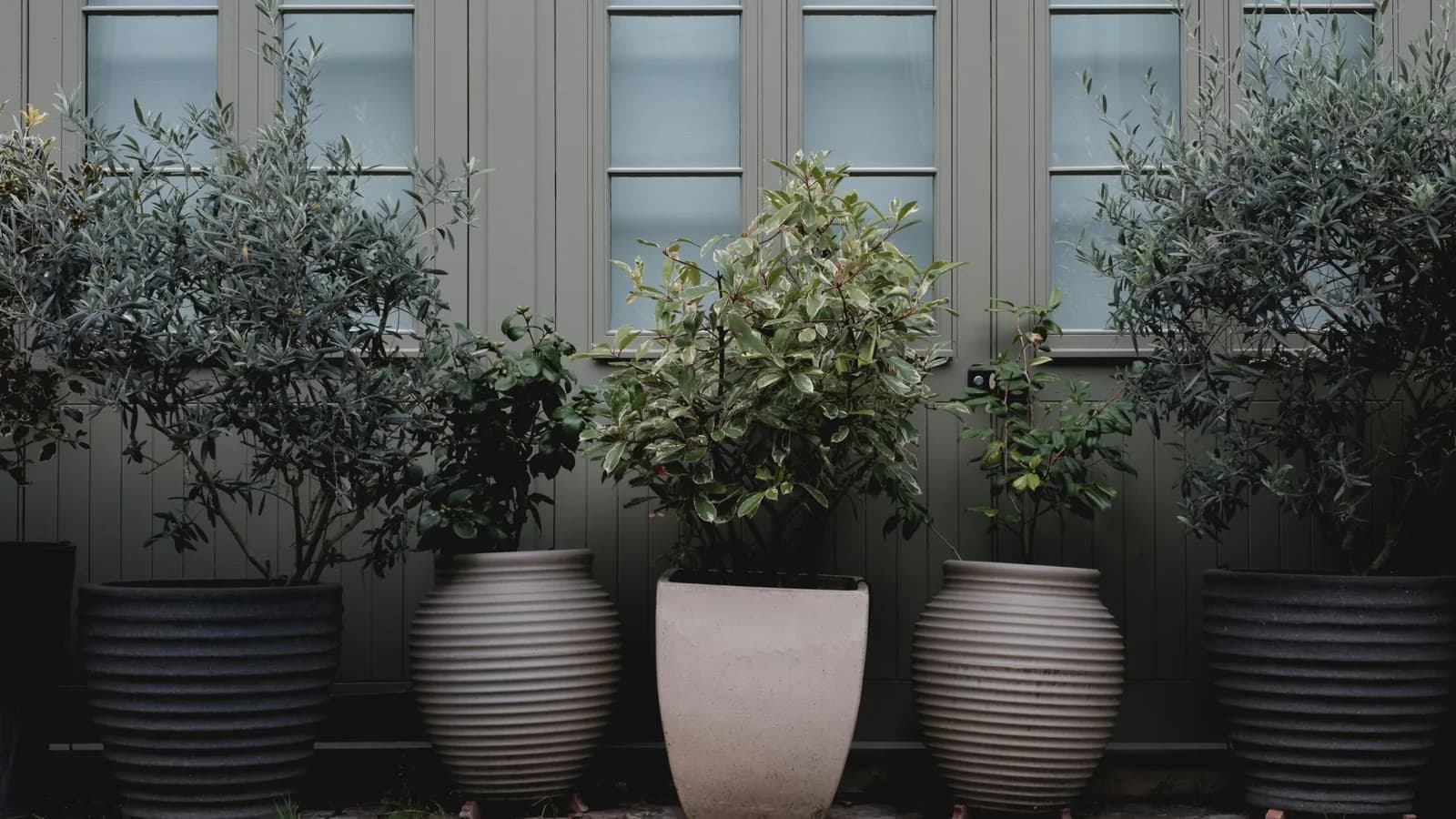
Planting and Compositions
A terrace looks unfinished when everything sits low. A specimen tree in a substantial container adds the height and structure that paving alone cannot give.
Read more